| 21 April - 8 May |
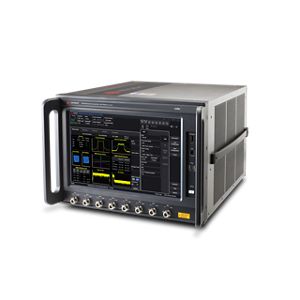
Workshop: 2008 Aerospace Defense Symposium
21 April - 8 May 2008, Various Cities and Dates |
| 15 May |
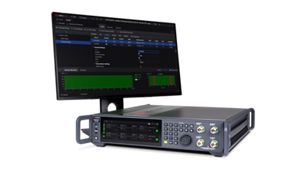
Webcast: Portable Impulse Response Models for Signal Integrity Applications 15 May 2008, 10 a.m. PST |
| 14 - 22 May |
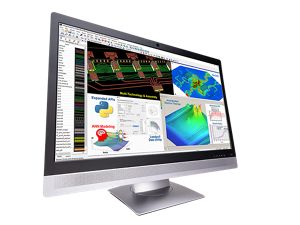
Seminar: RFIC Design Seminar: Increasing Simulation Coverage
14 - 22 May 2008, Various Dates and Cities |
| 20 May |
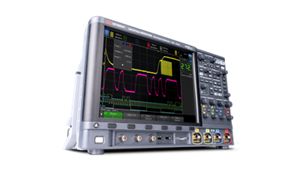
Seminar: Creating Robust Design Rules to Tame Signal Integrity
20 May 2008, Winnersh UK |
| 29 May |
Séminaire Techniques de conception et de test pour l'intégrité du signal 29 May 2008, Massy, France |
| - - - - - |
Weekly Live Genesys and SystemVue telephone conferences and interactive demos Topics include Genesys 2007, new modules - and your questions. |
Agilent EEsof EDA Events Archive
Webcasts, Seminar Papers, Tech Info Sessions, and ADS Project Files |

Why is this seminar important?
As technology becomes more complex, assuring readiness gets tougher. Agilent is a source of assurance that your mission will succeed.
- Keeping pace with technologies through leading-edge test solutions.
- Lowering the cost of RF & Microwave test system creation, maintenance and migration.
Join us for our complimentary 1-day symposium devoted to Test System Development and Military Communications. Come hear technical presentations on variety of topics selected from your choice of two tracks. Topics include testing wideband systems, protecting against obsolescence, software defined radio, streamlining test system design and more. Visit with our product experts during the product fair.
Who should attend?
This workshop will present valuable information for anyone working in communications and manufacturing systems.
Track 1 - Test development and production engineers responsible for architecting, developing, or maintaining RF and Microwave test systems for Aerospace and military applications.
Track 2 - Design and test engineers responsible for development and test of military radios, satellites, or wireless communication systems.
Agenda
- 8:30 - 9:00 - Registration/Continental Breakfast/Product Fair
- 9:00 - 9:10 - Welcome and Agenda Overview
- 9:10 - 10:10 - Tracks 1 & 2 -- Paper #1
- 10:20 - 11:20 - Tracks 1 & 2 -- Paper #2
- 11:30 - 12:30 - Tracks 1 & 2 -- Paper #3
- 12:30 - 1:00 - Lunch and Product Fair
- 1:00 - 2:00 - Tracks 1 & 2 -- Paper #4
Where & When
- April 21, 2008 - Tucson, AZ
- April 22, 2008 - El Segundo, CA
- April 29, 2008 - Richardson, TX
- May 6, 2008 - Andover, MA
- May 8, 2008 - Annapolis Junction, MD
Please signup for one the following tracks:
Track 1 - Test System Development
Track 1-Paper 1 : Wideband Vector Signal Analyzer Calibration Issues The vector signal analyzer (VSA) has become the industry standard for modulation performance analysis of digital communications systems as well as radar systems that employ complex intra-pulse modulation. To minimize distortion in critical waveforms, engineers involved with design of these systems pay strict attention to the frequency response, both phase and magnitude, of the components they use as building blocks. As signal bandwidths have increased, the VSA configuration has evolved to adapt to wide band requirements. In many cases traditional VSA hardware and spectrum analyzers have been augmented by wide band down converters and oscilloscopes to achieve required bandwidths. Just as in RF circuit design, phase and magnitude components of system frequency response must be considered to ensure accurate VSA measurements. This paper will review various configurations of the Agilent 89601A VSA that are used to extend measurement bandwidth and frequency range and will explore calibration techniques that can be used to improve measurement accuracy.
Track 1-Paper 2: Protecting Systems from Obsolescence The 15+ year life of A/D systems often require re-design and re-verification when test plans change, hardware evolves or software versions become obsolete. Often updates or modifications are made to the product under test; sometimes the test hardware needs to evolve to a current model. When this occurs, test systems that standardize on hardware, software, instrument interfaces or communication protocols need to be modified, the code recompiled, and the modified test system re-qualified. Now there is a new generation of services-based systems that manages each individual interaction by completely decoupling each behavior of the hardware and software components of a system. This paper explains how managed system interactions can enable component connections to be created, deleted and modified without compilation, linking, or pausing the system, even if its predecessor used a different communication protocol. This results in huge savings to A/D system contractors and extends the longevity of their systems.
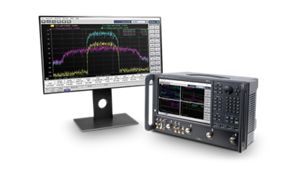
Track 1-Paper 3: Simplify RF Test Systems Using Modern Network Analyzers Traditional RF test systems are composed of multiple sources and measurement receivers, as well as a switch matrix. Calibrating these systems can be cumbersome and tedious. Modern VNAs can greatly simplify RF test systems, while simultaneously offering excellent accuracy and measurement speed. Built-in hardware such as two independent RF sources, pulse modulators and generators, noise receivers, and RF switches, can reduce the amount of test instrumentation required and may eliminate the need for a separate switch matrix. This paper uses a PNA-X network analyzer as an example to show how a single-connection, multi-measurement test system can be built. Calibration issues will also be discussed.
Track1-Paper 4: Test System Measurement Integrity - A Discussion on Calibration and Verification Fundamental to all test system design is the integrity of the measurements made with the system. This paper addresses some of the key aspects that contribute to the measurement integrity of a system. In particular, it will discuss the different measurement parameters and how traceability and measurement uncertainty are established. The initial part of the discussion will focus on the general fundamental units of measurement and how these are used in establishing the traceability for Impedance, Power and Noise. The second part of the paper will focus more specifically on Vector Network analyzer measurements and the associated traceability and uncertainty. Also covered in this module will be a discussion of different methods of verification of your S- parameter measurements. (This paper only offered at Tucson and Los Angeles)
Track 2 - Military Communications
Track 2-Paper 1: A New Test System for Military Radios As military radios evolve in their complexity, so do the needs for a more comprehensive radio test system. Software defined radios are now a reality so software defined radio testers are now also needed. This paper defines and describes a new software defined radio tester with the flexibility required to test a variety of different military radios.
Track 2-Paper 2: Capture and Analysis of Wideband Signals Whether created by hopping, OFDM, or just fast pulses, wideband signals are often particularly difficult to capture and analyze because of their instantaneous bandwidth, spacing in time, or difficulty distinguishing the signal from interference. Signals such as UWB (MB-OFDM or DS-UWB), Link 16, or radar signals such as a wideband chirp, require tradeoffs between capture time, capture bandwidth, noise floor, and other factors to achieve the optimum configuration for capture and analysis.
Track 2-Paper 3: Combining FPGAs and RF: A new SDR Design and Test Methodology Design goals and development schedules make simulation an essential tool in the development of new communication systems. For today's radios, this means the simulation must be able to model the mixed-domain design of the radio so that FPGA baseband impairments can be examined together with RF circuit level impairments and evaluated against key metrics such BER and EVM, using multiple waveforms. Additionally, links between the simulation and physical test can greatly facilitate the implementation of the simulated design in hardware.
In this paper, a simulated design will be implemented in FPGA hardware and evaluated together with the RF system level design by combining simulation and test. MIMO and STC implementations will also be discussed.
Track2-Paper 4: Vector Signal Generation for Communications Measurements Modern military radios leverage the latest commercial radio systems, but exceed these systems in flexibility, performance and functionality. New and custom waveforms must be created well before standard test equipment offering these waveforms become available. This paper includes a discussion on generating waveforms analogous to commercial services, such as WiMAX™ and W-CDMA, generating custom waveforms from MATLAB and ADS, methods for generating frequency hopping signals, waveform record and playback, and streaming playback of long and unique waveforms.
Note: WiMAX is a trademark of the WiMAX Forum
Papers for Annapolis only
- MD-Paper 1: Trends in Commercial Communications
- MD-Paper 2: WiMax paper
- MD-Paper 3: The Evaluation of ELINT, COMINT, and EW Systems Using Radiated Signal Environments (Synergent)
- MD-Paper 4: Vector Signal Generation for Communications Measurements See Track 2, Paper 4 above
- MD-Paper 5: Capture and analysis of Wide Band signals See Track 2, Paper 2 above
Registration
Click the following link for more details on how to register for this event.
top of page

This webcast is based on a paper first presented at DesignCon 2008 Conference. It was one of only ten papers from among the eighty-eight presented at DesignCon that were honored with the IEC DesignCon Paper Award.
In the signal integrity industry, S-parameters have become the most commonly distributed models for simulating passive components. Because S-parameters are frequency-domain values, many signal integrity engineers are finding it difficult to accurately implement these parameters in time-domain simulations. Addressing transient convolution specifically, this paper shows the need for a new impulse response model and proposes a methodology for its inclusion in time-domain simulations. The paper also solves another difficult problem by presenting a new technique for converting band-limited S-parameters into ‘base-delay’ causal and passive impulse response models that preserve accuracy to the maximum frequency of the original S-parameters.
Who should view this Webcast
This webcast will benefit high-speed serial link designers and signal integrity engineers who use S-parameter and impulse response interconnect models.
Registration
Click the following link for more details on how to register for this event.
top of page

Overview
This half-day seminar will provide solutions to key design issues for Wireless / RFIC designers when using Agilent EEsof's GoldenGate RFIC Simulator through a series of application-focused papers. The seminar will be offered at 5 locations.
Key topics:
- Simulation with standard-complaint signals
- Parallel simulation
- Monte Carlo simulations
- Mixed Signal simulation with Verilog-AMS
- New capabilities in GoldenGate4.2
Why This Seminar is Important:
RFIC designers are under significant time constraints and rarely have the time & resources to do all the needed simulations. This seminar will demonstrate how GoldenGate can increase design simulation coverage while still maintaining tight development schedules. During the seminar you will have a unique opportunity to meet with Agilent application experts face-to-face where you'll learn about the latest tools and techniques for RFIC design.
What to Expect:
Three 50 minute presentations by Agilent experts that will provide a practical overview of solutions addressing the key design challenges of RFICs. Presentations will include live demonstrations plus there will be extra time for one-on-one demonstrations. As a result of attending this seminar, designers will understand how to increase their simulation coverage, decrease design spins, increase manufacturability and reduce overall design risk using Agilent EEsof's GoldenGate RFIC simulator.
Who Should Attend:
Analog/RF circuit and system designers who develop large-scale RF/Mixed signal ICs, RFIC Design Managers, as well as CAD managers.
Dates:
- 14 May, 2008 - Hillsboro, OR
- 15 May, 2008 - Santa Clara, CA
- 20 May, 2008 - Austin, TX
- 21 May, 2008 - Chandler, AZ
- 22 May, 2008 - San Diego, CA
Agenda:
- papers 40 minutes, 10 min Q/A, 10 min break after 2nd paper
- 9:00 - 9:30: Registration
- 9:30 - 9:40 Welcome and Intro: RFIC Simulation Overview & Roadmap
- 9:40 - 10:30 PAPER 1: Simulating RFIC Circuits with Realistic Wireless Standard-Compliant Signals
- 10:30 - 10:40 BREAK
- 10:40 - 11:30 PAPER 2: Making the most of GoldenGate: Maximizing Simulation Productivity
- 11:30 - 12:20 PAPER 3: RF Mixed Signal verification using Verilog AMS and Digital State Sweeping
- 12:20 - 12:30 Wrap-Up and Drawing
- 12:30 - Lunch
- 1:30 - 3:00 - Meet with the Experts
Registration
Click the following link to register for this event:
top of page

Why this event is important:
Agilent Technologies has pleasure inviting you to join this special one-day class, designed and offered by Signal Integrity Expert, Dr. Eric Bogatin, to help you accelerate your interconnect design process and enable you to create your own design rules to balance performance with cost, risk and schedule. Have you ever asked a signal integrity question and received the answer "it depends?" Find out in this class how to answer "it depends" questions. With this class, you will be able to tame signal integrity problems in your next product design, including:
- Optimise via design
- Minimise impact from discontinuities
- Optimise differential pair design
- Optimise board stack up
Who should attend:
This class is intended for all types of hardware or circuit design engineers (package, component, connector and circuit board) who must solve layout and design problems on a regular basis. It is recommended that engineers who do not have a firm understanding of the basic concepts in signal integrity take Bogatin Enterprises’ EPSI (Essential Principles of Signal Integrity) class.
What to expect
This is a practical class illustrating the right way of designing systems with clock frequencies over 100 MHz, where signal integrity effects, such as ground bounce, reflections, losses and cross talk, dominate. Every design is custom. There is no one set of rules that can be used for every design. Instead, by understanding the root cause of the most important problems, and how the physical design of packages, connectors and circuit boards affect signal integrity, you can create a design that tames signal integrity problems.
This class leverages rules of thumb, approximations and commercial simulation tools such as Agilent Technologies’ Advanced Design System (ADS) to illustrate the process of exploring design space to establish a set of rules that balance the performance you need with the costs, schedule and risks you can afford.
All attendees will receive a copy of Dr. Bogatin’s book, Signal Integrity - Simplified, a copy of the Bogatin Enterprises publication Appendix A, and one month’s unlimited subscription to the web based training at BeTheSignal.com.
Registration
Click the following link for more details and information on how to register for this event.
top of page

Séminaire Techniques de conception et de test pour l'intégrité du signal, 29 Mai 2008, Massy France
Overview
Product demonstrations and papers by technical experts and application engineers will introduce the latest innovations in modeling, signal integrity and jitter analysis, focusing on both design and validation solutions.
Registration
Click the following link for more details and information on how to register for this event.
top of page
Live Genesys Demos!
Join us via WebEx and a telephone conference on Thursdays at 10 a.m. PDT/1 p.m. EDT for one hour.
Topics will include an overview of the latest Genesys version and a look at new modules.
Interactive SystemVue Demos!
Join us via WebEx and a telephone conference on Thursdays at 10:30 a.m. PDT/1:30 p.m. EDT for one hour.
Topics will include an introduction to SystemVue and application-specific examples.
For either of these events . . .
If you are west of the Mississippi River, call Walt Best at (866) 462-4662 or email salesuswest@wlv.agilent.com. If you are east of the Mississippi, call Paul Beavin at (866) 581-0484 or email salesuseast@wlv.agilent.com.
They will follow up with the WebEx and telephone conference information.
We look forward to seeing you at the WebEx!
top of page
Acknowledgements
"WiMAX" and "Mobile WiMAX" are trademarks of the WiMAX Forum®.
|
 |

|